


Chapters on the lives and sacrifices of Field Marshal Sam Manekshaw, Brigadier Mohammad Usman, and Major Somnath Sharma have been added to the NCERT syllabus in this academic year, in Class VIII (Urdu), Class VII (Urdu), and Class VIII (English), respectively.
The National Council of Educational Research and Training (NCERT) has introduced chapters on Field Marshal Sam Manekshaw, Brigadier Mohammad Usman, and Major Somnath Sharma in its syllabus for the 2024–25 academic year to inspire students with stories of courage, duty, and sacrifice. These chapters are part of a broader initiative by the Ministry of Defence, in collaboration with the Ministry of Education, to integrate the legacy of the National War Memorial into school education and foster patriotism.
Details of the Chapters:Field Marshal Sam Manekshaw: Included in Class VIII (Urdu). Known as "Sam Bahadur," he was India’s first Field Marshal, celebrated for his strategic brilliance and leadership during the 1971 Indo-Pak War, among other conflicts. His chapter highlights his exceptional leadership and tactical acumen.Handcuffs Backpacks Vegan Leather Casual Backpack Multipurpose Travelling Bags Daypacks For Men And Women
https://www.pib.gov.in/PressReleasePage.aspx?PRID=2153740
Brigadier Mohammad Usman: Included in Class VII (Urdu). Nicknamed the "Lion of Naushera," he was a key figure in the 1947–48 Indo-Pak War, leading operations to recapture Jhangar and Naushera. He was posthumously awarded the Mahavir Chakra for his sacrifice in combat on July 3, 1948.
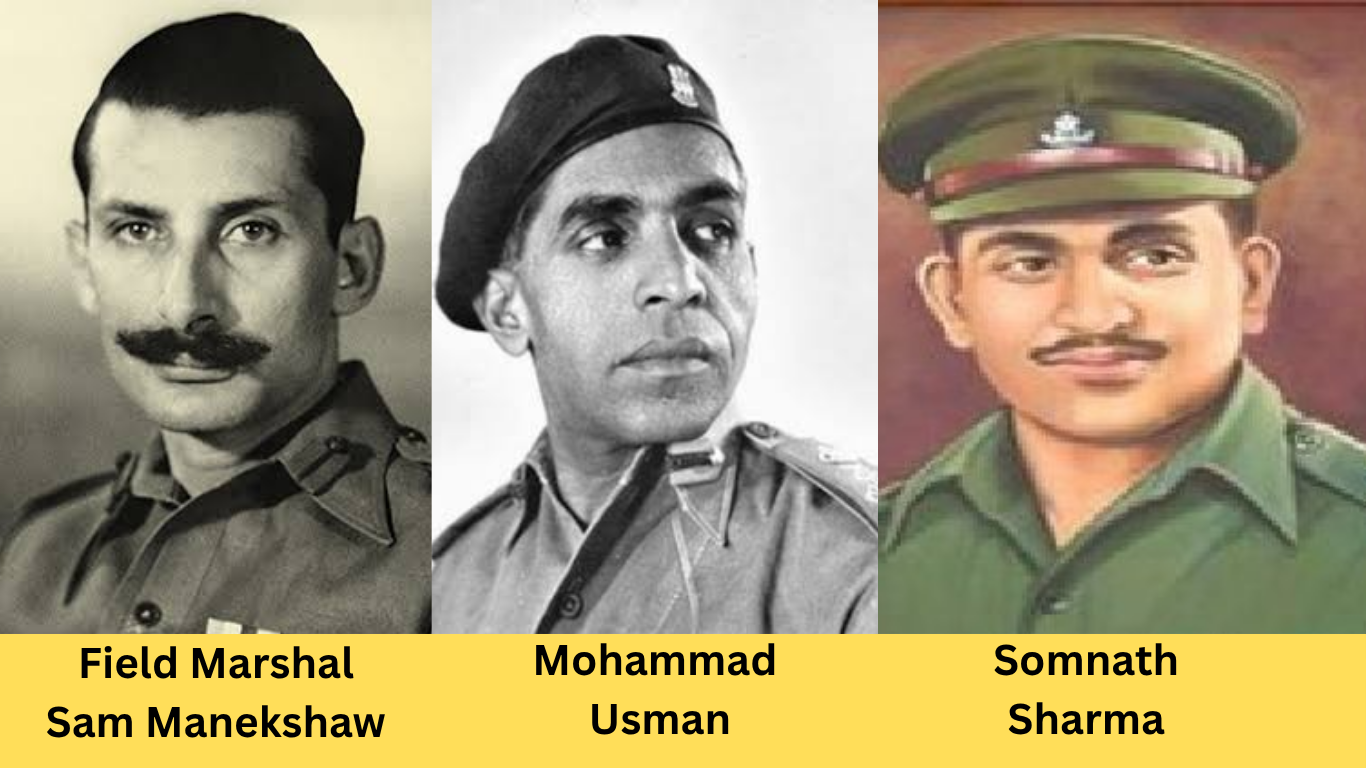
Major Somnath Sharma: Included in Class VIII (English). The first recipient of the Param Vir Chakra, India’s highest wartime gallantry award, he was martyred at 25 during the 1947–48 Indo-Pak War while defending Srinagar. His chapter emphasizes his bravery and supreme sacrifice.
Purpose and Context:The chapters aim to provide inspirational narratives of courage, leadership, and duty, instilling values like resilience, empathy, and national pride in students. The inclusion of the National War Memorial in the curriculum further honors India’s fallen heroes. These additions are taught in both Urdu and English textbooks for Classes VII and VIII, ensuring accessibility across linguistic mediums.
This initiative reflects a deliberate effort to embed military history and values in education, though some might argue it risks prioritizing selective narratives over a broader historical context. Nonetheless, the focus on these figures underscores their enduring legacy in India’s military heritage.