


The Arunachaleshwara Temple, located at the foothills of the Arunachala Hill in Tiruvannamalai, Tamil Nadu, India, is a prominent Hindu temple dedicated to Lord Shiva. It is one of the Pancha Bhoota Stalams, representing the element of fire (Agni), and the hill is revered as the "Tejo Lingam" or "Agni Lingam." During the Karthigai Deepam festival, a massive lamp (Maha Deepam) is lit atop the hill, symbolizing Shiva’s divine radiance and the spiritual significance of the site. This event underscores the temple’s profound spiritual and divine essence. Spiritual SignificanceThe Arunachala Hill is considered one of the holiest sites in Hinduism, believed to be a manifestation of Lord Shiva himself. Spiritual luminaries like Sri Ramana Maharshi regarded the hill as a center of spiritual wisdom, emphasizing its role in guiding devotees toward enlightenment.
The act of circumambulating the hill, known as Giri Valam, is a revered practice, especially during full moon days, drawing millions of devotees.Mythological ImportanceThe Arunachaleshwara Temple is associated with one of the Pancha Mahalingams, specifically the Jyotirlinga of fire. According to legend, a dispute arose between Brahma and Vishnu over who was supreme. To settle it, Lord Shiva manifested as an infinite column of light (Tejo Lingam). Vishnu, in the form of a boar, sought the base of the lingam by digging into the earth, while Brahma, as a swan, flew skyward to find its summit. Both failed, signifying Shiva’s boundless nature. This event is believed to have occurred on the day of Magha Krishna Chaturdashi, which is specially celebrated. The Karthigai Deepam festival, observed on the full moon day of the Karthigai month, is marked with grandeur, with the lighting of the Maha Deepam atop the hill.
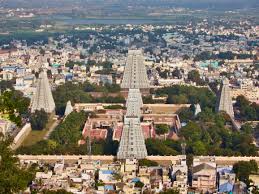
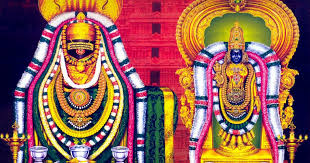
Architectural GrandeurSpanning 10 hectares, the Arunachaleshwara Temple is among India’s largest temple complexes. It features four towering gopurams (gateway towers), with the eastern gopuram, built by Sevappa Nayak of the Nayak dynasty, standing at an impressive 66 meters (217 feet) with 11 stories, making it one of India’s tallest. The temple complex houses significant structures like the Vasantha Mandapam, Kalahatheeswarar Shrine, Brahma Theertham, and a 6-foot-tall Nandi statue installed by Vallala Maharaja, showcasing exquisite Dravidian architecture. Shiva and ParvatiLord Shiva is worshipped here as Arunachaleshwara or Annamalaiyar, and the lingam is known as the Agni Lingam.
Allegations Against the Election Commission: Surjewala’s Claims and Congress’s Stand..!
His consort, Parvati, is revered as Unnamalai Amman or Apitakucha Ambal. The adjacent Arunachala Hill, standing at 914 meters, is considered the embodiment of Lord Shiva.Historical SignificanceThe temple’s history is tied to the Sangama Dynasty (1336–1485 CE), Saluva Dynasty, and the Tuluva Dynasty of the Vijayanagara Empire (1491–1570 CE). Inscriptions from the reign of King Krishnadevaraya (1509–1529 CE) record offerings to the temple, written primarily in Tamil, Kannada, and Sanskrit. The 9th-century Shaiva saint-poet Manikkavachagar composed the Thiruvempavai here, and the 7th-century Tevaram hymns classify the temple as a Paadal Petra Sthalam, a sacred site glorified by Saiva saints.
Location and ConnectivityTiruvannamalai is accessible via the Villupuram-Katpadi railway line, with the nearest railway station located in the town itself. The temple is easily reachable by road from Bengaluru (approximately 200 km) and Chennai (approximately 185 km), making it a convenient pilgrimage destination.ConclusionThe Arunachaleshwara Temple is a sacred haven that offers spiritual solace to devotees, with its architectural splendor and mythological significance attracting pilgrims from across the globe. The temple and the Arunachala Hill continue to be a beacon of divine energy and spiritual awakening.