


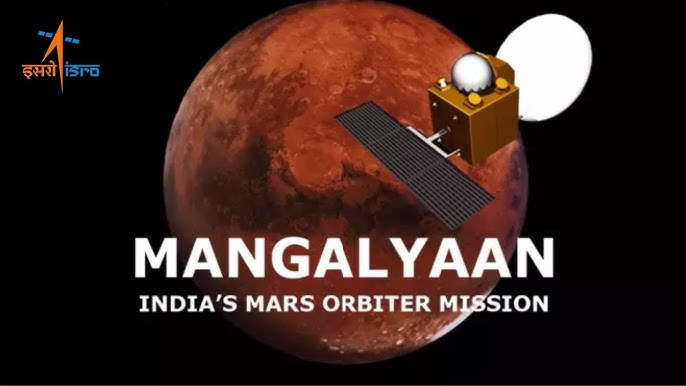
The Indian Space Research Organisation (ISRO) captured the world’s attention in 2013 with the Mars Orbiter Mission (Mangalyaan-1). Achieving success in reaching Mars on its very first attempt, and at a cost of just ₹450 crore, India proved its capability in space technology. Now, ISRO is stepping toward its next big dream is
Mangalyaan-2.
Mangalyaan-2 is a next-generation Mars exploration mission, far more advanced than its predecessor. The primary objectives of this mission include:
Studying the geological and mineral structure of Mars.
Gathering precise data on Mars’ atmosphere, weather patterns, and dust storms.
Researching signs of ancient water and the possibility of life.
Strengthening Earth–Mars communication and long-distance space travel technology.
ISRO has already collaborated with NASA on several projects. In the Mangalyaan-2 mission, NASA is expected to provide technical assistance, communication support, and contributions to scientific instruments. NASA’s Deep Space Network (DSN) will play a crucial role in exchanging data between Earth and Mars.
The 2019 film Mission Mangal, starring Akshay Kumar and Vidya Balan, was inspired by the Mangalyaan-1 mission. The movie showcased the struggles, technical brilliance, and patriotism of ISRO scientists, earning widespread appreciation. If Mangalyaan-2 succeeds, it is certain to inspire yet another film.
The success of Mangalyaan-2 will elevate India to a higher position in the global space research arena and may even pave the way for a future manned mission to Mars. It will also boost India’s prestige on the world stage.
Mangalyaan-2 is not just a space mission – it is a symbol of India’s technological strength, scientific curiosity, and determination to achieve the impossible. This joint effort by ISRO and NASA will open a new chapter in Earth–Mars exploration.
Black Hole: The Darkest Gateway of the Universe, Where Time and Space Disappear!