


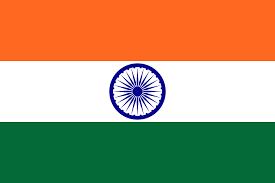
The design of the Indian national flag has evolved over time. The current design was adopted by the Constituent Assembly of India on July 22, 1947. It was designed by Pingali Venkayya.Safari Flip 32L Casual Printed Backpack, 2 Compartments, Bottle Holder, Front Pocket, School Bag for Boys and Girls, College Bag, Office Bag, Travel Bag for Men and Women
1906: The first national flag of India was hoisted in Calcutta, featuring three horizontal stripes of green, yellow, and red.
1907: The "Saptarishi" flag was designed by Madame Cama, with eight lotuses and a crescent moon and star.
1917: Annie Besant and Lokmanya Tilak hoisted a new flag with five red and four green horizontal stripes.
1921: Mahatma Gandhi proposed a flag with a spinning wheel at the center, which later inspired the current design.Rahul Gandhi coined a new slogan, "Kagaz mitao, Adhikaar churao," : on whom? here is the info
1931: The Indian National Congress officially adopted a flag with saffron, white, and green stripes and the charkha (spinning wheel) in the center.
Significance of the Tricolour
The Tricolour is a horizontal rectangular flag with three colors and the Ashoka Chakra at the center. Each element holds a specific meaning:
Saffron (top stripe): Represents courage, sacrifice, and strength.
White (middle stripe): Represents peace, truth, and purity.
Green (bottom stripe): Represents fertility, growth, and auspiciousness of the land.Box Office Collection of War 2 Sequel So Far: Here’s the Information
Ashoka Chakra: A 24-spoke wheel in navy blue, symbolizing the wheel of law (Dharma Chakra). The 24 spokes represent the 24 hours of the day, signifying that there is life in movement and death in stagnation.
The flag is governed by the Flag Code of India, which regulates its display and use. It is a symbol of national unity and pride for all Indians.