


India’s seafood export industry is facing significant challenges due to a 50% tariff imposed by the United States, impacting its market share. As the leading supplier of frozen shrimp and squid to the U.S., India’s market share grew from 24.4% in 2015 to 40.6% by 2024. However, the recent tariff has reduced this share. To counter this, the Indian government is encouraging exporters to explore alternative markets such as the UK, European Union (EU), Japan, China, South Korea, Russia, Oman, UAE, and other West Asian countries.In 2023-24, India exported 17.81 lakh metric tonnes of seafood, valued at ₹60,524 crore (US$7.38 billion). Frozen shrimp accounted for 40.19% of the volume and 66.12% of the revenue, making it the top export commodity.
Morning and Evening Walking: A Pathway to a Healthy and Disciplined Lifestyle..!
A recent Free Trade Agreement (FTA) with the UK has eliminated the 20% tariff on Indian seafood, raising expectations of increasing India’s share in the UK’s $5.4 billion seafood import market from 2.25% to a significant level. Japan, China, South Korea, and West Asian countries also show promising potential.The government is urging exporters to utilize the Fisheries Infrastructure Development Fund to upgrade value-addition, processing, and packaging facilities. Plans are underway to establish trade centers in emerging markets like Africa, Latin America, and Eastern Europe.
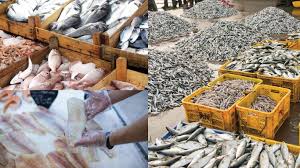
Andhra Pradesh dominates India’s shrimp exports with a 60-70% share, followed by Tamil Nadu, Kerala, Gujarat, and Odisha.
The U.S. imposes a total tariff of 59.71% (50% tariff, 5.76% countervailing duty, and 3.96% anti-dumping duty), putting India at a disadvantage compared to Ecuador (15%), Vietnam (20%), and Thailand (19%).
Quality concerns, including chemical residues, have reduced India’s EU market share from 35% to 11%.
Future Goals: India aims to increase seafood exports to $12 billion by 2025 and $14 billion by 2030 by focusing on value-added products, improving quality standards, and tapping new markets.The Marine Products Export Development Authority (MPEDA) plays a key role in promoting seafood exports through market promotion, quality control, research, and value addition.
MPEDA aims to double the share of value-added products to 20% by 2030.The Seafood Exporters Association of India (SEAI) supports exporters through training, skill development, and sustainable practices. It will host the 24th India International Seafood Show (IISS) from September 25-28, 2025, at Bharat Mandapam, Delhi. These strategies aim to keep India’s seafood industry competitive globally and offset losses from U.S. tariffs.