


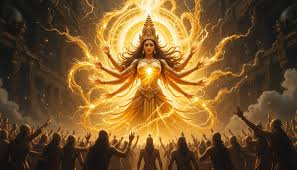
According to mythology, Mahishasura, named after "Mahisha" (buffalo) and "Asura" (demon), ruled the Mysore region. He received a boon from Lord Brahma that no man could kill him, which fueled his arrogance. He waged war against the gods and even conquered the heavens. When the gods sought help from Brahma, Vishnu, and Shiva, their combined energies manifested as the divine Goddess Chamundeshwari (Durga).
The Goddess engaged Mahishasura’s army in a fierce nine-day battle. On the tenth day, when Mahishasura took the form of a buffalo, she defeated him with her trident and sword. This day is celebrated as Vijayadashami (Dussehra). It is believed that Chamundi Hill in Mysore is the site of Mahishasura’s defeat.
Historical Significance – Mysore Wodeyar Era
12th Century Records: Inscriptions from the Hoysala period indicate Chamundeshwari worship at the hill.
Vijayanagara Influence: Post-15th century, the temple saw significant expansion.
Mysore Wodeyars’ Devotion: In the 17th century, the Wodeyars declared Chamundeshwari as their royal deity.
Royal Contributions: The temple was adorned with a gopuram, stone pillars, and bronze idols.
1827: Krishna Raja Wodeyar III constructed 1,008 steps to facilitate devotees’ access.
Present Day: Chamundi Hill remains a spiritual symbol of Mysore, with grand celebrations during Navratri and Dussehra, where special worship is offered to the Goddess.The name "Mysore" is believed to originate from "Mahisha’s Ooru" (Mahisha + Ooru, meaning Mahishasura’s town). Atop Chamundi Hill stands the temple of Goddess Chamundeshwari, while a statue of Mahishasura is located at the base, both being major attractions. The iconic Dussehra Jumboo Savari procession begins with the worship of Goddess Chamundeshwari.