


In Karnataka, temples were traditionally closed during the total lunar eclipse (Chandra Grahan) on the night of September 7–8, 2025, adhering to customary Hindu practices. This eclipse, visible across the country including Bengaluru, was a significant astronomical event where the Moon turned a striking reddish hue, known as the "Blood Moon," lasting about 82 minutes in totality from 11:01 PM IST to 12:23 AM IST.
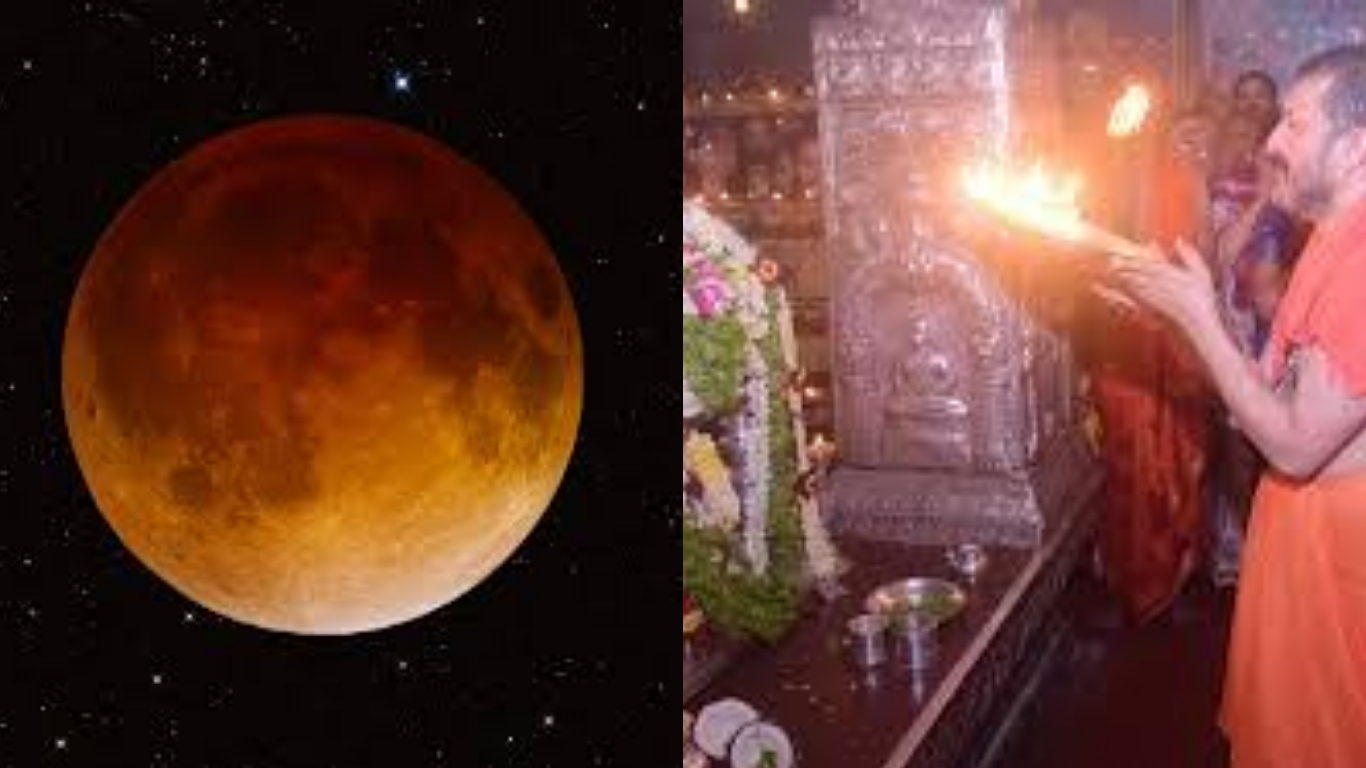
The closure stemmed from the belief that negative energies prevail during such events, leading to the suspension of worship, darshan, and other rituals from the "Sutak" period, which began around 12:58 PM IST on September 7.
As of September 8, 2025, post-eclipse purification has been completed, and temples have reopened for devotees, restoring normal spiritual activities.
Information on Temple Reopening: During the eclipse, scriptural guidelines suspended all religious activities in temples to maintain sanctity. The Sutak period, considered inauspicious, prompted closures starting in the afternoon of September 7. Popular temples across Karnataka, including those in Bengaluru, Mysuru, and Udupi, followed this tradition, with doors shut until the eclipse fully ended around 2:25 AM IST on September 8.
Post-Eclipse Rituals: Purification (Pavitrikarana or Punyahavachanam): Immediately after the eclipse concluded, temple premises underwent thorough cleansing. This included sprinkling holy water (such as Ganga jal), smearing sacred substances, and performing Homa (fire rituals) and Havana to dispel any perceived negative influences and restore purity. In Bengaluru temples like Banashankari and Kadu Malleshwara, these rituals were conducted early on September 8 morning.
Special Worship: Priests offered Abhishekam (ritual bathing of the deity), detailed puja, and Aarti (light offering) to the deities. At places like Udupi Sri Krishna Matha, special Chandika Homa or Rudrabhishekam were performed to reinstate the temple's sanctity. These rites, often starting around 3–5 AM, ensured the space was spiritually revitalized before public access.
Darshan for Devotees: Following purification, darshan resumed progressively. Most temples reopened between 4 AM and 8 AM on September 8. For instance: In Bengaluru's Gaali Anjaneya Temple, darshan started after Shanti Puja around 7 AM.
Kadu Malleshwara Temple reopened at 4 AM post-Rudra Homa, with Prasad Seva following.
Across Karnataka, including Bidar temples like Mailar Mallanna and Honnakeri Siddeshwar, full darshan was available from 7 AM after special pujas.
Special programs, such as Mahamangalarati, were held in many shrines to mark the reopening, allowing devotees to resume their visits with renewed devotion.
Practices in Major Temples of Karnataka: Udupi Sri Krishna Matha:
Closed during the Sutak period, it reopened early on September 8 after special pujas. Devotees were allowed darshan from around 6 AM, following traditional purification to honor the eclipse's spiritual implications. TRASE Block Heels Sandals For Women, Dusky Stylish & Comfortable Footwear
Sringeri Sharada Peetham: Adhering to strict scriptural norms, the temple closed on September 7 afternoon and reopened on September 8 morning after Vedic rituals, including Samprokshana (sprinkling of holy water). Darshan commenced post-Maha Mangala Harathi around 7:30 AM.How to Obtain a Golden Pass for Mysuru Dasara Festival: Here’s the Information
Bengaluru Temples (e.g., Banashankari, Dharmaraya): These urban shrines adjusted timings, closing by 3–4 PM on September 7. Reopening occurred after dawn rituals on September 8, with darshan available from 5–7 AM. Special homas were performed to align with the eclipse's occurrence during Pitru Paksha, emphasizing ancestral reverence.
Other Notable Sites (e.g., Bidar and Mysuru Temples): Temples like Bidar Narasimha Zharana remained closed until 7 AM on September 8, reopening only after purification. In Mysuru's Chamundeshwari Temple, similar early morning rites ensured darshan resumed by 8 AM.