


In the world, some lakes captivate our attention with their wondrous colors. Among them, pink lakes (Pink Lakes) hold a special place. The water in these lakes appears in bubblegum or strawberry pink hues, resulting from scientific reasons in the environment. However, there are still some mysteries behind this phenomenon. Here is the key information and mysteries about it:
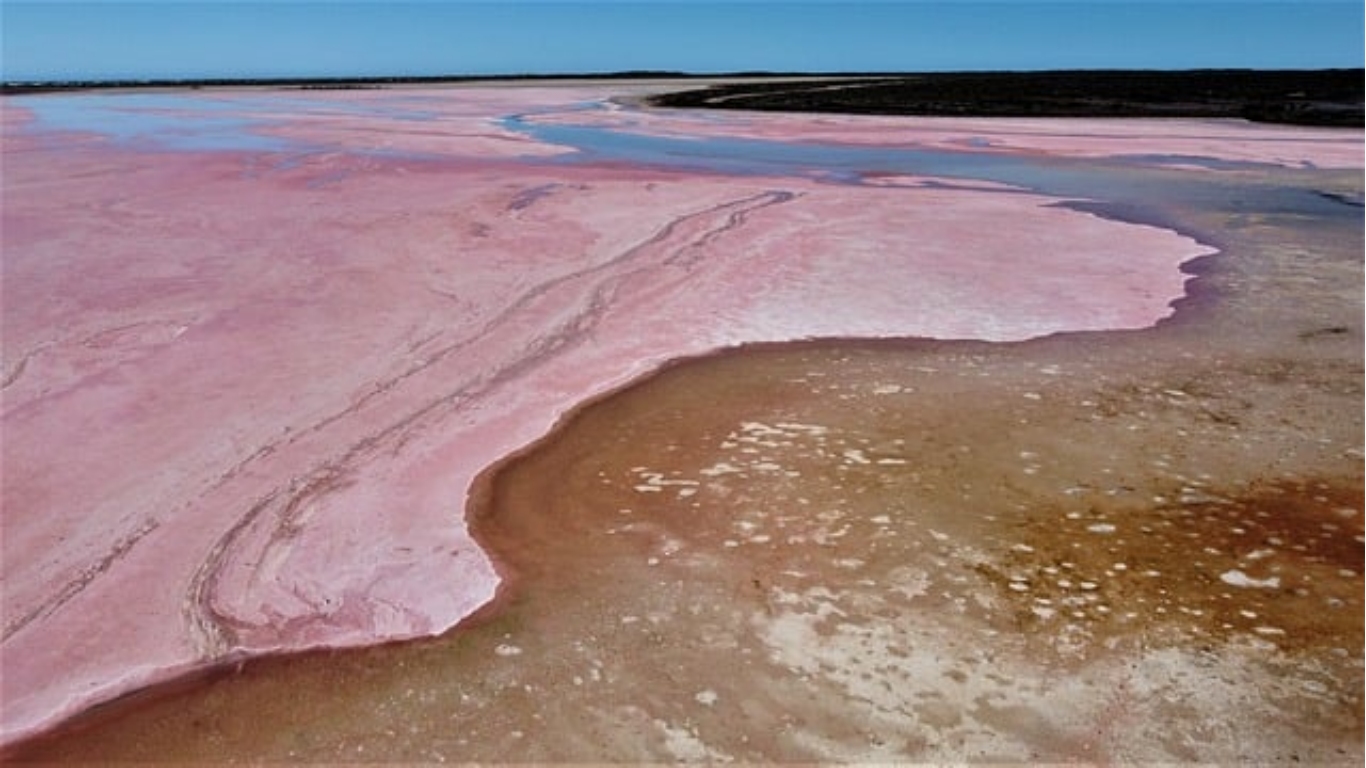
Cause of the Pink Color: Scientific Explanation
Salt Concentration: These lakes are extremely salty (sometimes up to 40%). This makes it difficult for ordinary organisms to survive, but special algae (microorganisms) and bacteria thrive.
Dunaliella salina: This is the main alga that produces carotenoids. These help absorb sunlight and turn the water pink. Sulfur bacteria (Salinibacter ruber) and archaea also contribute to this.
Environmental Changes: If salt decreases or rainfall increases, the color fades. For example, Australia's Lake Hillier has lost its pink hue since 2020 because the saltwater concentration has reduced.
Famous Pink Lakes and Their Mysteries-
Lake Hillier (Australia): 600 meters in extent, the pink color has been observed since 1802. In 2022, scientists discovered over 20 microbes (microorganisms in the water). The color is fading due to salt harvesting.
Lake Retba (Africa): 40% salt; fish have adapted to salt management. Annual production of 38,000 tons of salt.
Reports indicate there are many more pink lakes like this.
These pink lakes reveal nature's mysteries. Even though scientifically explained, their beauty remains captivating.