


Alaska(USA): August 15, 2025, summit in Anchorage, Alaska, between Trump and Russian President Vladimir Putin. Here is the key points.
Alaska Summit Outcome:The summit between Trump and Putin at Joint Base Elmendorf-Richardson in Anchorage on August 15, 2025, lasted nearly three hours but did not result in a ceasefire or a concrete peace agreement for the Russia-Ukraine war. Trump described the talks as “extremely productive” but emphasized, “There’s no deal until there’s a deal,” indicating no final agreement was reached. Putin, however, claimed an “agreement” was made to “pave the path toward peace in Ukraine,” though no specifics were provided. This discrepancy suggests differing interpretations of the talks’ outcomes.
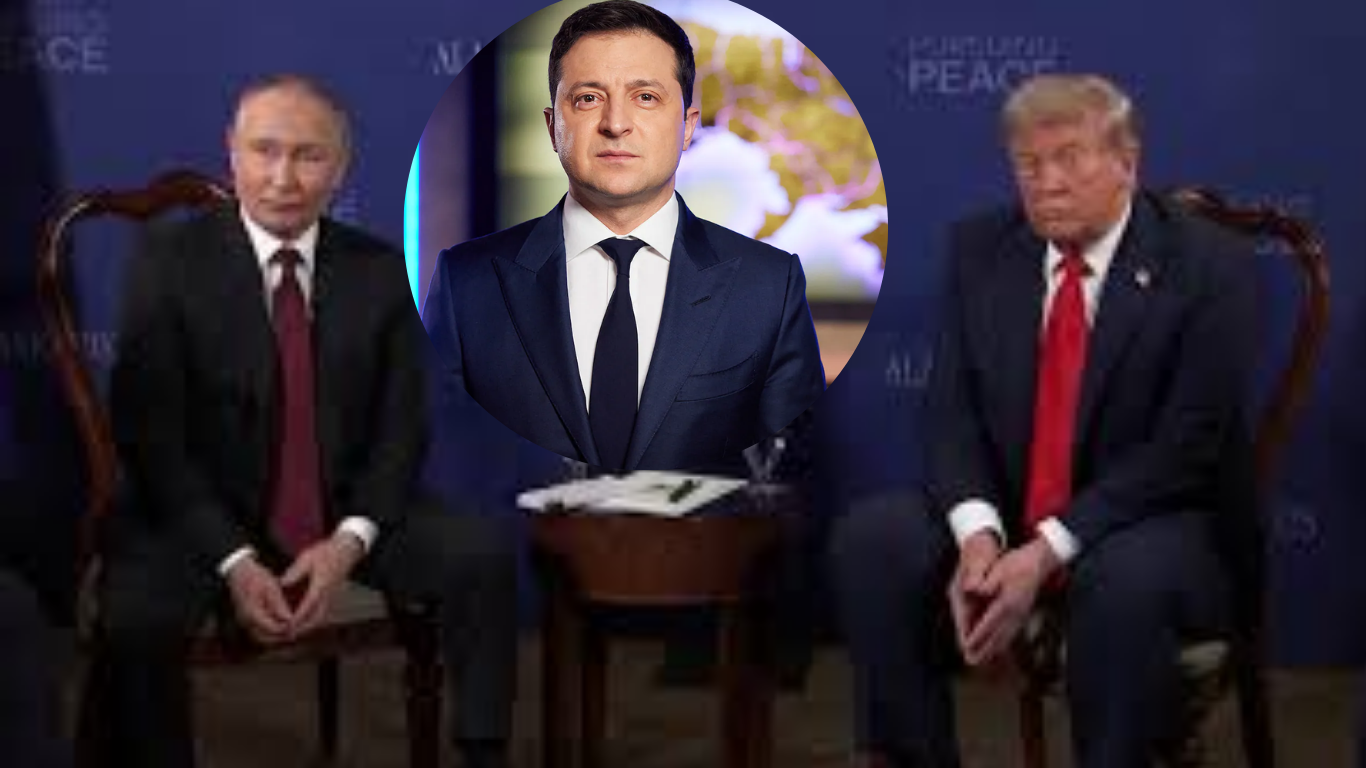
Ukrainian President Volodymyr Zelenskyy was notably excluded from the summit, which raised concerns among Ukraine and its European allies. Zelenskyy had previously warned that decisions made without Ukraine’s involvement would be meaningless.
Phone Call with Zelenskyy and European Leaders:Following the summit, Trump reportedly spoke with Zelenskyy and European leaders, including French President Emmanuel Macron, German Chancellor Friedrich Merz, UK Prime Minister Keir Starmer, Italian Prime Minister Giorgia Meloni, Finnish President Alexander Stubb, Polish President Karol Nawrocki, and NATO Secretary General Mark Rutte. The call, lasting about an hour, focused on the summit’s discussions and next steps.
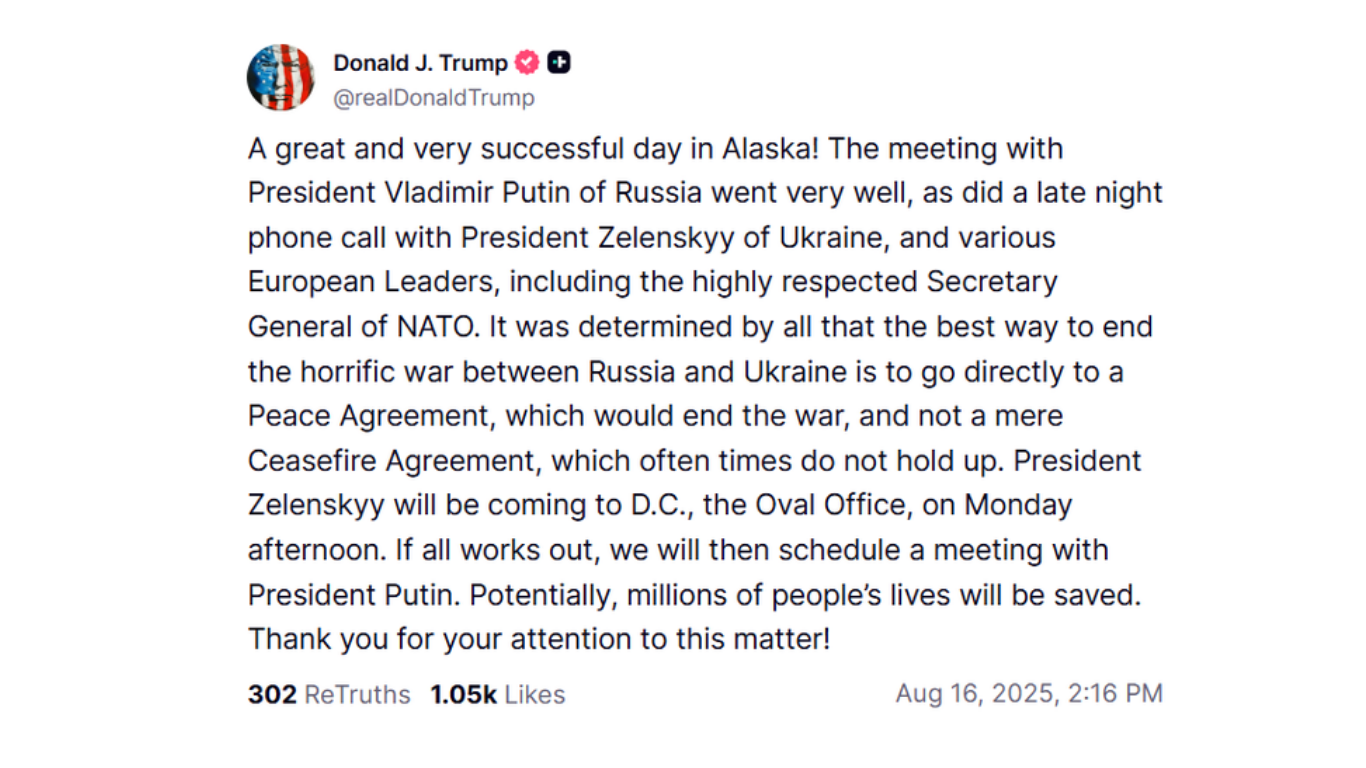
Trump’s statement, as you quoted, claims that “all” agreed a comprehensive peace agreement, rather than a temporary ceasefire, is the best path forward. However, sources indicate mixed reactions. For instance, Zelenskyy expressed readiness for a trilateral meeting (U.S., Ukraine, Russia) but stressed Ukraine’s conditions for peace, such as no NATO membership renunciation.
European leaders and Ukraine remain cautious, with some, like Norwegian Foreign Minister Espen Barth Eide, emphasizing the need for increased pressure on Russia to achieve a just outcome.
Zelenskyy’s Planned Visit to Washington: Zelenskyy announced plans to meet Trump in Washington, D.C., on Monday, August 18, 2025, to discuss the Alaska summit and potential peace strategies. This aligns with your statement about Zelenskyy visiting the Oval Office. Zelenskyy reiterated support for a trilateral meeting format involving Ukraine, the U.S., and Russia, suggesting he sees this as a viable framework for negotiations.
The visit indicates Ukraine’s intent to stay directly involved in any peace process, countering its exclusion from the Alaska talks.
Potential Trilateral Meeting with Putin: Your statement mentions scheduling a meeting with Putin if “all works out.” Trump has floated the idea of a trilateral meeting involving himself, Zelenskyy, and Putin, potentially to finalize a peace deal. Putin suggested the next meeting could be in Moscow, though Trump noted this idea might face criticism.
No firm date or location for such a meeting has been confirmed, and its feasibility depends on resolving significant sticking points, including Russia’s demands (e.g., Ukraine renouncing NATO membership and recognizing Russian control over occupied territories) and Ukraine’s insistence on sovereignty and security guarantees.
Peace Agreement vs. Ceasefire: The emphasis on a “peace agreement” over a “ceasefire” aligns with Trump’s reported stance during the post-summit call, where he allegedly told Zelenskyy and European leaders that Putin is uninterested in a ceasefire but seeks a comprehensive deal.PALAY® Straw Hat Sun Hats for Women,Wide Brim Cap Beach Hat for Women Stylish UV Protection Cap,Summer Packable Travel Sun Visor Hat - UPF 50+
However, the lack of concrete details from the Alaska summit raises skepticism about immediate progress. Critics, including Ukrainian lawmaker Oleksiy Goncharenko and former U.S. official Matt Dimmick, argue that the summit yielded no substantive deliverables and may have been more about Russia “buying time” than achieving peace.
Ukraine’s position, as articulated by Zelenskyy and others, remains firm against concessions like permanent neutrality or territorial losses, which Russia demands.
Public and Political Reactions: Supportive Voices: Some U.S. Republicans, like Senators Lisa Murkowski and Katie Britt, expressed cautious optimism about the summit, with Murkowski urging Ukraine’s inclusion in future talks. Hungarian Prime Minister Viktor Orban called the summit a step toward a safer world.
Critical Voices: Democrats, such as Senate Minority Leader Chuck Schumer, criticized Trump for giving Putin a global stage without securing tangible results. Alexander Vindman, a key figure in Trump’s 2019 impeachment, called the summit a display of U.S. weakness. Ukrainian-American voices, like Volodymyr Valchuk, expressed disappointment over the lack of clarity.Dalit Student Suicide Case at BIT Mesra: Jharkhand High Court Orders ₹20 Lakh Compensation
Russian Perspective: Russian politicians, such as Andrei Klishas and Dmitry Medvedev, portrayed the summit as a victory for Moscow, emphasizing Russia’s narrative of pursuing peace on its terms.
Context of the Conflict: The Russia-Ukraine war, ongoing since Russia’s full-scale invasion in February 2022, has resulted in significant casualties and territorial losses for Ukraine, with Russia controlling about one-fifth of Ukrainian territory, including parts of Donetsk, Luhansk, Kherson, Zaporizhzhia, and Crimea.
Previous peace efforts, like the 2022 Istanbul Communiqué, collapsed due to Russian escalations and distrust. Russia’s demands, including Ukraine’s demilitarization and recognition of occupied territories, remain major obstacles