


The Comptroller and Auditor General (CAG) report for 2023-24 has raised alarms over Karnataka’s financial health, revealing that the state borrowed Rs 63,000 crore to finance its five flagship guarantee schemes and cover resulting fiscal deficits. This borrowing, a sharp increase of Rs 37,000 crore over the previous year’s Rs 26,000 crore, underscores significant stress on the state’s economic framework.Prime Minister Narendra Modi Meets Chinese Foreign Minister Wang Yi in Delhi: A Step Towards Improving Relations with China
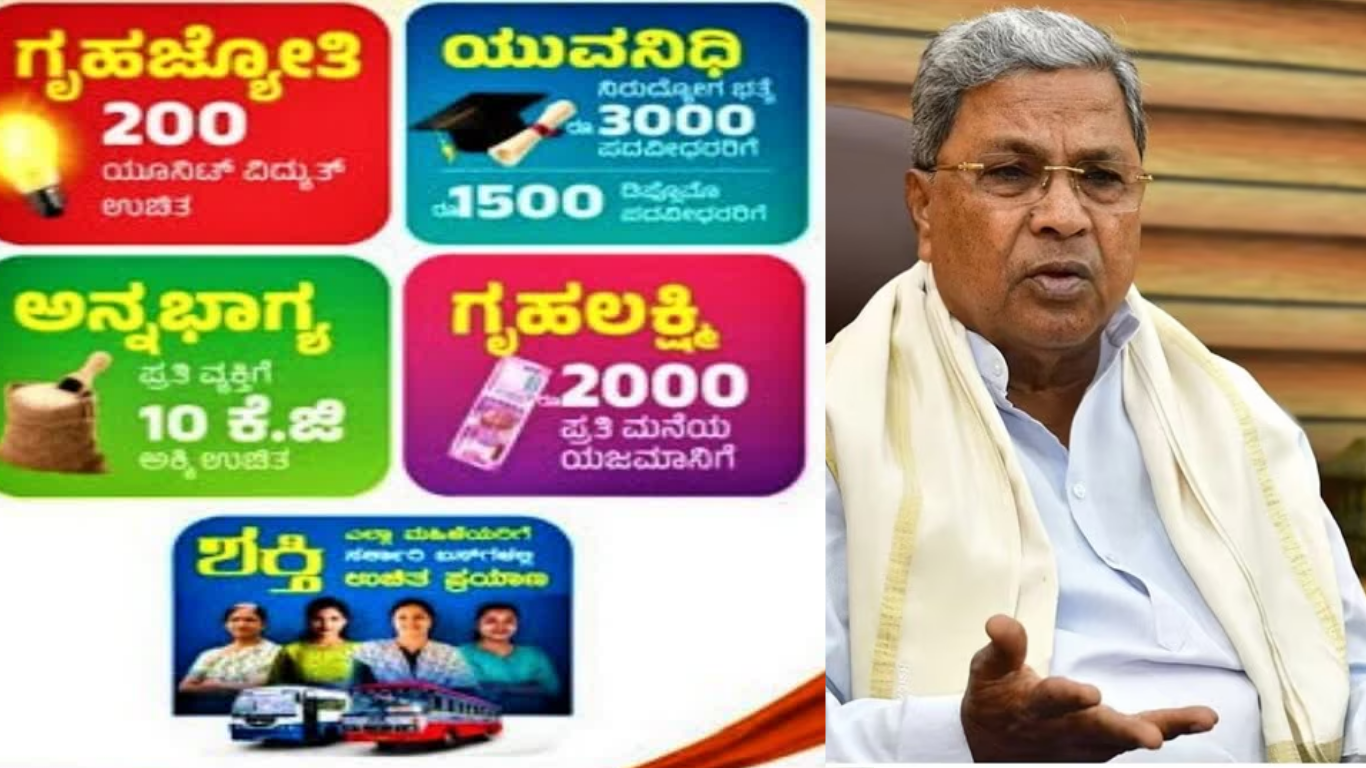
Tabled in the Karnataka Assembly, the report has ignited debates over the government’s fiscal policies and its focus on welfare schemes.The report notes that Rs 5,299 crore originally allocated for infrastructure development was redirected to fund these guarantee schemes, potentially compromising long-term economic growth.
These schemes, including Gruha Lakshmi (Rs 16,964 crore), Gruha Jyothi (Rs 8,900 crore), Anna Bhagya (Rs 7,384 crore), Shakti (Rs 3,200 crore), and Yuva Nidhi (Rs 88 crore), accounted for 15% of the state’s revenue expenditure. While these initiatives have bolstered social welfare and political support, their heavy reliance on borrowing has widened the fiscal deficit from Rs 46,623 crore in 2022-23 to Rs 65,522 crore in 2023-24, with a revenue deficit of Rs 9,271 crore.
The CAG report highlights a critical imbalance between revenue and expenditure, warning that the rising debt burden could jeopardize Karnataka’s financial stability, especially with future debt repayments looming. The diversion of infrastructure funds further threatens the state’s long-term development prospects, as these projects are essential for economic growth.GST Slab Changes: Price Reductions for Cars, Mobiles, Computers
The report calls for a reevaluation of fiscal strategies to restore balance and ensure sustainable governance.Despite the social benefits of the guarantee schemes, their financial implications have raised concerns about fiscal prudence. The state’s increasing liabilities, which grew at an average annual rate of 17.35% between 2019-20 and 2023-24, and a debt-to-GSDP ratio rising to 23.49% in 2023-24, signal the need for urgent reforms.
The Assembly’s discussions on the report are expected to focus on these fiscal challenges, pushing the government to address its financial management shortcomings. To secure Karnataka’s economic future, the government must prioritize fiscal discipline and ensure adequate investment in infrastructure for sustained growth.GST 2.0 Reform: The Future of Tax Structures for Cigarettes and Tobacco Products!