


Emirates Airline, the Dubai-based carrier, has introduced a strict new policy prohibiting the use of power banks (portable chargers) on all its flights, effective October 1, 2025. This change stems from a comprehensive safety review amid rising incidents of lithium battery-related fires and hazards in aviation. While passengers can still carry power banks in their cabin baggage, they cannot use them to charge devices or recharge the power banks themselves during the flight. The rule applies network-wide, including departures from Dubai International Airport (DXB) and all other hubs.
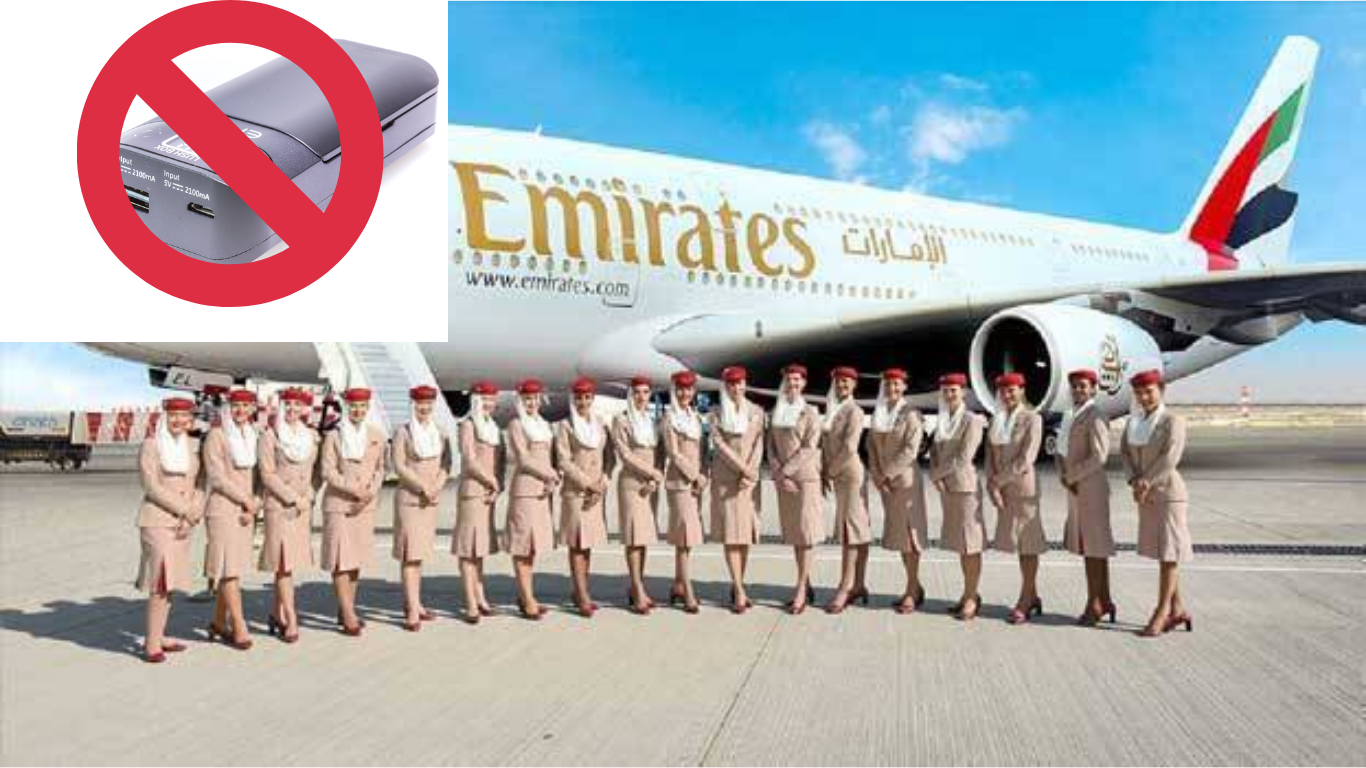
Why the Ban? Key Reasons from Emirates Emirates cited growing safety concerns as the primary driver: Rising Lithium Battery Incidents: There's been a sharp increase in onboard lithium battery mishaps across the aviation industry, fueled by more passengers using power banks.
Thermal Runaway Risks: Power banks (using lithium-ion or lithium-polymer cells) can overheat, catch fire, explode, or release toxic gases if damaged, overcharged, or short-circuited.Also Read: Omar Abdullah Rules Out BJP Alliance, Says He’d Resign Over J&K Statehood Compromise
Lack of Safeguards in Devices: Unlike smartphones with built-in trickle-charging to prevent overcharging, many power banks—especially cheaper models—lack these protections.
Proactive Risk Mitigation: The policy ensures cabin crew can quickly access and respond to any potential fire, as power banks must be stored in easily reachable spots.BULLMER Trendy Clothing Set with Shirt & Pants Co-ords for Men
Emirates emphasized that passenger safety is its "top operational priority," and this aligns with global trends where airlines are tightening lithium battery rules.
What Can Passengers Carry and Do?
Allowed: One per passenger, max 100 watt-hours (Wh) capacity. Must be in cabin baggage only.
In the seat pocket or under the seat in front. Must display clear capacity rating (Wh or mAh).
Emirates provides in-seat USB/power outlets on all aircraft—use those for charging. Fully charge devices pre-flight.
Prohibited:
In checked luggage (existing rule). No spare batteries beyond the one power bank.
-Charging any device (e.g., phone, tablet, laptop) from the power bank. Recharging the power bank using in-flight power outlets.
-Overhead bins or stowage compartments.
Capacity Check: To calculate Wh: (mAh × Voltage) / 1000. Most standard power banks (under 20,000mAh at 3.7V) fall under 100Wh. Higher-capacity ones (100-160Wh) need airline approval, but Emirates limits to one under 100Wh.
On Long-Haul Flights: Emirates recommends charging devices fully before boarding, especially on routes like Dubai to the US or Europe (8+ hours). In-seat power should suffice for most needs, but plan for battery drain on entertainment systems or calls.
Short Flights or Layovers: Minimal impact if you're not relying on power banks, but ensure your phone/laptop lasts the journey.
Broader Context and ComparisonsThis isn't unique to Emirates—it's part of an industry-wide shift:Etihad (UAE): Allows up to 10 spare batteries/power banks (<100Wh) in cabin baggage but bans use/charging onboard.
Other Airlines: Many (e.g., Delta, United) restrict power banks to carry-on with similar no-use rules during flights; some ban them entirely in checked bags.
Global Regs: Follows IATA/ICAO guidelines on lithium batteries to prevent incidents like the 2023-2024 spikes in cargo/baggage fires.