


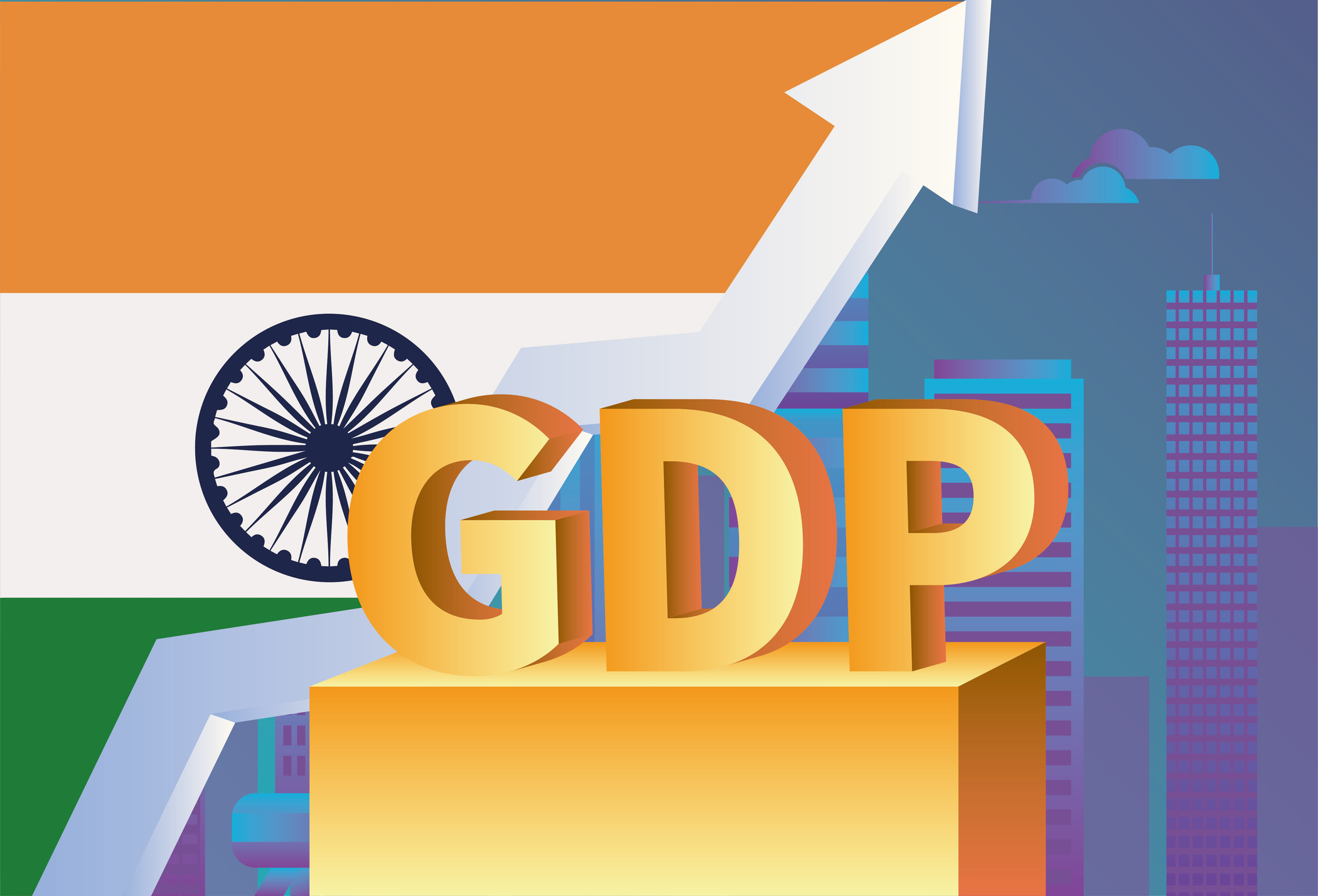
New York: India is emerging as the world's fastest-growing major economy, with the latest evidence coming from the World Economic Outlook 2025 report. Yes, according to the recent World Economic Outlook 2025 report released by the International Monetary Fund (IMF), India is set to continue as the world's fastest-growing major economy next year with a 6.6% GDP growth rate, drawing global attention toward the country. The report indicates that global economic growth in 2025 will be 3.2%, a slight decline from the previous year's 3.3%.
However, among developing nations, the Asia region has emerged as the primary engine of growth.China's growth is expected to slow to 4.8%, while the US is projected at 2%, the Euro area at 1.2%, and Japan at 1.1%, as per IMF estimates. The IMF analysis attributes India's rapid growth to digital transformation, tax reforms (GST), and increased capital investments. According to the report, “India is a key driver of global growth and is poised to soon surpass Japan and Germany to become the world's third-largest economy.”
In contrast, many nations including Russia, Germany, and Brazil are facing slower growth.Key Statistics (2025):
India: 6.6%
China: 4.8%
America: 2.0%
Euro Area: 1.2%
Global Average: 3.2% Jaisalmer-Jodhpur Highway Bus Tragedy: At least 20 people were k**illed in the tragic incident
Looking ahead to 2026, the IMF suggests India's growth may dip slightly to 6.2%, but it will still remain at a higher level compared to other countries.So, what are the internal changes in India driving this development?
The main reasons for India's GDP growth are as follows:Digital Transformation
Systems like UPI, Aadhaar, digital banking, and e-governance have expanded rapidly in India. Increased digital connectivity between rural and urban areas has accelerated economic activities.Goods and Services Tax Reforms
Improvements in the GST system have brought stability in tax collection. Increased revenue for state and central governments has paved the way for higher capital investments.
Capital Investment and Infrastructure
Central government initiatives like “Gati Shakti,” “Make in India,” and production-linked incentive schemes have supported new industrial growth. Massive investments have been made in roads, railways, ports, and airports.
Strength of the Services Sector
Continuous growth has been seen in IT, fintech, healthcare, and tourism sectors. India has maintained its global leadership in IT exports.
Domestic Demand
The purchasing power of the middle class has increased. Urbanization and expansion of the consumer sector have provided direct support to GDP. Redraft this to English. and give me ash tags and search tags after camas.Bata Women’s Stylish Ballerina Flats – Trendy, Comfortable
Government Economic Policies
RBI's interest rate policies have kept inflation under control. The government's “capex drive” has complemented economic growth.
Exports and Foreign Investment
Foreign investors are showing interest in India's manufacturing sector. The “China+1” strategy has brought new investments flowing into India.
Overall, according to the IMF, “India's economic growth has been made possible by structural reforms, technological advancements, and stable policies. There is potential for this momentum to continue in the coming years.”