


As the once-mighty kingdom of Kashi ancient Varanasi faded from the geopolitical stage, relinquishing its crown to voracious empires, a profound religious renaissance stirred within its hallowed bounds.
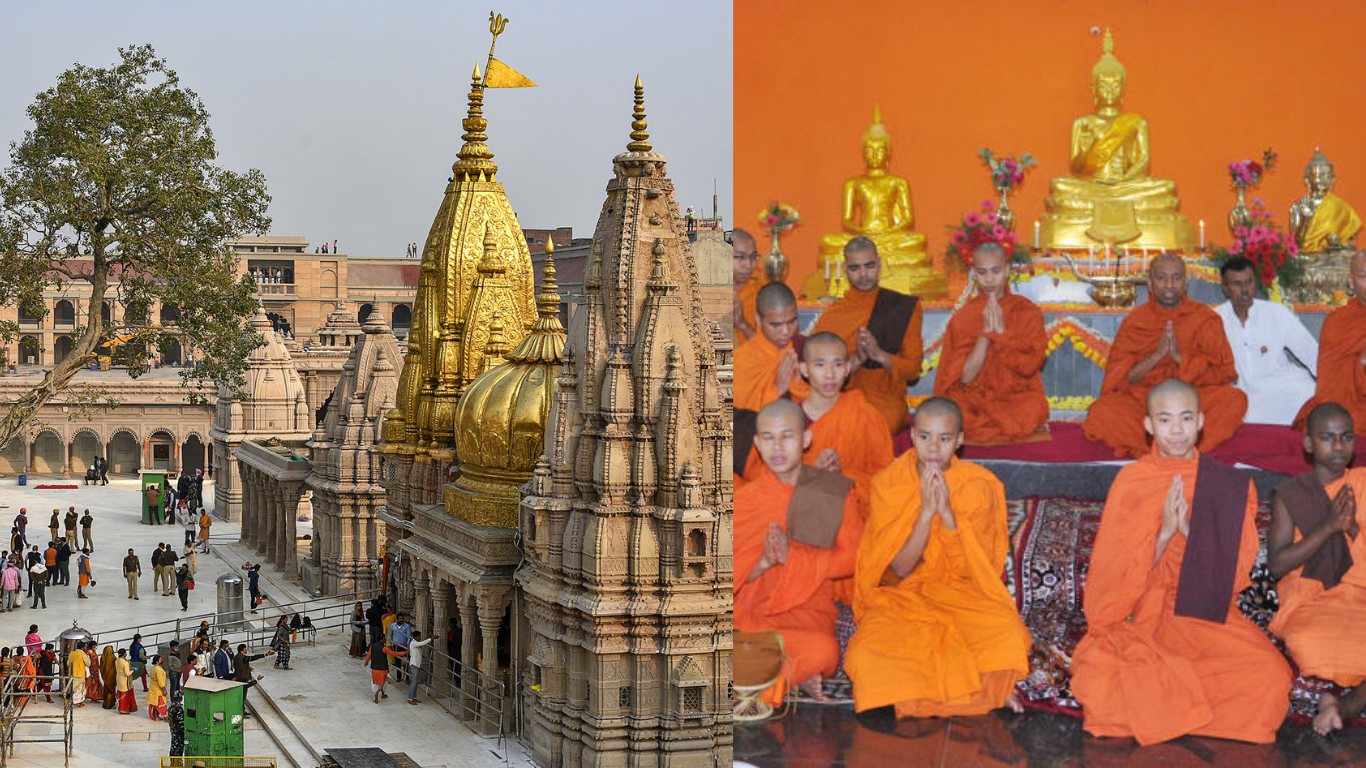
In the shadow of waning sovereignty, the city extended a warm embrace to Buddhism during the Mauryan era (c. 322–185 BCE), a time when Emperor Ashoka's edicts transformed it into a vibrant hub of the Dharma. Sarnath, just beyond the city's ghats, became synonymous with the Buddha's first sermon, drawing monks and mendicants to its stupas and viharas. Also Read: Ram Ji Gang' Trapped: Producer Ravi Gowda's Stolen Hard Disk Recovered, One Arrested..!!
Yet, amid this influx, Brahmanical traditions rooted in Vedic rituals and Shaivite fervor retained their exalted perch, unyielding as the Ganges' eternal flow.The Shunga dynasty (c. 185–73 BCE), which held sway over Kashi in the post-Mauryan interlude, tilted the scales firmly toward Brahmanism.
Descended from Pushyamitra, a Brahmin general who toppled the Mauryas, the Sungas championed orthodox Hinduism, sponsoring yajnas and revitalizing temple cults to counter Buddhism's tide. Their patronage fortified Kashi's identity as Shiva's abode, even as Buddhist echoes lingered in its lanes.Women's Cotton Embroidery Anarkali Kurti and Pant with Dupatta Set
By the 1st century CE, winds of change howled from the steppes the Kushan Empire, nomadic warriors from Central Asia under the visionary Kanishka (r. c. 127–150 CE), swept in and claimed Varanasi as a Silk Road jewel. Kanishka, a syncretic sovereign who straddled Zoroastrianism, Hinduism, and Buddhism, emerged as the faith's unparalleled patron post-Ashoka.
He convened the Fourth Buddhist Council in Kundalvana, dispatching missionaries to realms afar from China to Rome ensuring the Dharma's global bloom. Under his aegis, Kashi's monasteries flourished, stupas gleamed with Greco-Buddhist artistry, and the city's cosmopolitan pulse quickened.Paradoxically, this Buddhist efflorescence cast a pall over indigenous Hinduism, nudging it toward obscurity in the city's sacred fabric. Silicon City Pothole Video Sensation: Potholes Dominate Roads Despite CM’s Deadline!
Enter the Guptas (c. 320–550 CE), the architects of India's "Golden Age," whose reign serendipitously ignited a Hindu revival. It was then that the Puranas those encyclopedic epics blending cosmology, mythology, and devotion were meticulously composed, from the Vishnu Purana's Vaishnava hymns to the Skanda Purana's exaltation of Kashi as Avimukta Kshetra (the unyielding realm of Shiva).
These texts, infused with bhakti (devotional fervor) and iconography, breathed fresh vitality into idol-worshipping traditions, countering Buddhism's monastic ethos with accessible, emotive worship. The Gupta epoch heralded an architectural renaissance Temples soared with intricate shikharas, sculptures of gods and devis danced in stone, and vaastu principles elevated sacred spaces to divine symmetry. Also Read: Another Successful Step by ISRO: 'Bahubali' LVM3 Rocket Launches CMS-03 This Evening!
Kashi reaped the harvest its Vishwanath shrine expanded, Dashashwamedha Ghat adorned with ritual grandeur, and artisans from across the empire converging on its banks.
From political pawn to perennial sanctuary, Kashi adapted ingeniously a Buddhist beacon under Mauryas and Kushans, a Brahmanical bastion under Shungas, and a Puranic powerhouse under Guptas. Across generations, it morphed into an indispensable crucible nurturing faiths, fostering arts, and whispering moksha to the weary soul.Also Read: New Record in Vehicle Sales in India: Highest Level in October 2025!
In this eternal dance of decline and rebirth, Varanasi teaches that true empires are not of clay and conquest, but of spirit and stone.