


Deoghar : When the temple staff opened the donation box in Baba Baidyanath temple, they were surprised to see Pakistani currency in the box. Not only Pak currency, the temple had received the donation in many currencies.
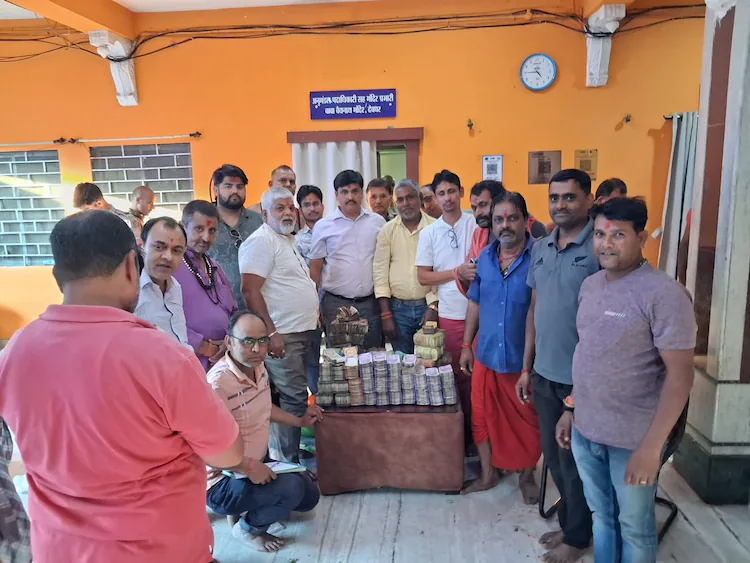
it counted over 32 lakhs in Indian currency, 9000 Nepalese rupees, 11 US dollars, 100 Pakistani Rupees, and 20 Euros. The officials were shocked this is the first time they are getting the foreign currencies in their donation box. Amazon Brand - Myx Women's Schiffli Embroidery Ethnic Dress | Fit and Flare | Knee Length (Available in Plus Sizes)
District Magistrate Naman Priyesh Lakra was surprised to see Pak currency and said, though this is not the first time we are getting foreign currencies, but Pak currency was a surprise and this happened for the first time.
All the 118-donation box were 0opened simultaneously and was counted with a strict vigilance of temple’s administrative staff. Total of 118 box, counted 32,14,245 in Indian currency.
Lakhs of devotees come to the temple from all across the country, as one of the 12 Jyotirlingas is in Baba Baidyanath Temple. Apart from donating cash in the box, people also make anonymous contributions while worshipping the deity. Closure of the Bab al-Mandeb Strait will paralyse the global oil flow
Baba Baidyanath Dham in Deoghar holds a unique place in Hindu spiritual tradition. It is not only one of the twelve Jyotirlingas, the most sacred abodes of Lord Shiva, but also one of the 51 Shakti Peethas, making it a rare confluence of both Shiva and Shakti worship. Pakistan must realise the perpetrator cannot claim victimhood forever on terrorism
According to Hindu faith, Deoghar is the place where Ravana, while carrying Lord Shiva to Lanka, took rest here during his journey, violating the condition that he must not stop. As a result, the deity remained here, and the site became a significant place to worship.