


The Mughals came with the sole intention of destroying the temples of India. During their time, many of our temples were razed to the ground, the wealth of our temples was plundered, common people of the Hindu faith were subjected to atrocities, and women were abducted.
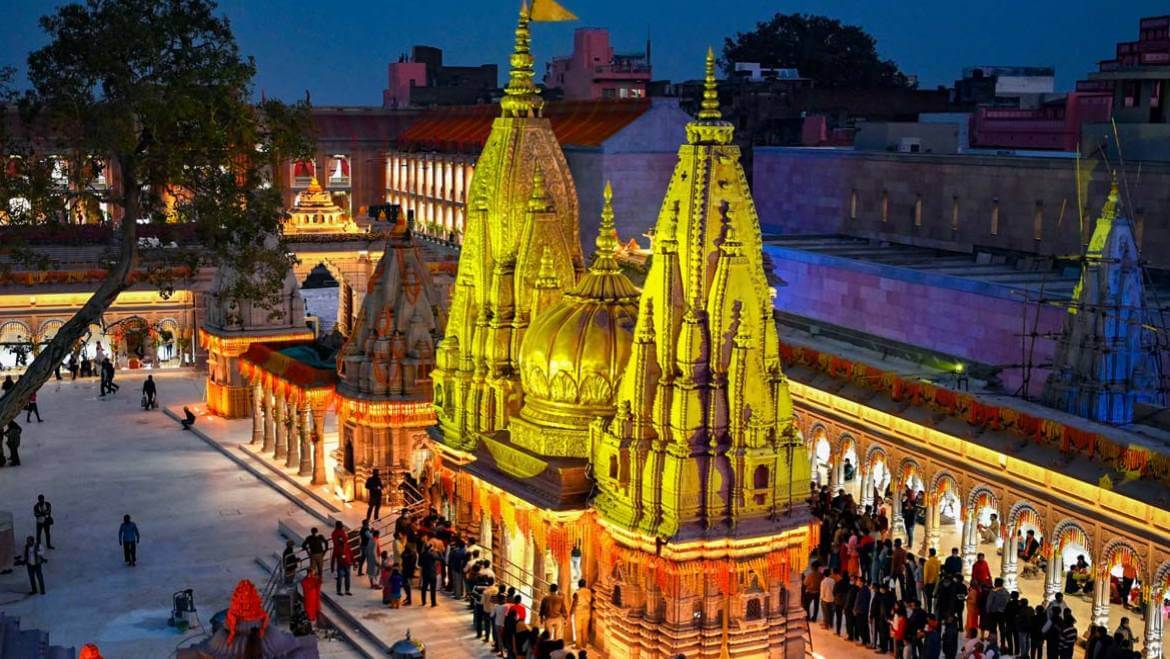
But people united again, and temples were rebuilt. Our culture was reconstructed by our litterateurs (scholars/writers).
During the reign of the Mughal Emperor Akbar, a magnificent Kashi Temple was built in 1580 AD with the help of Raja Todarmal. GoSriKi Women's Georgette Anarkali Kurta Set with Dupatta | Elegant Pink Ethnic Dress | Flared Long Kurti for Festive
However, the Kashi Temple was destroyed in 1669 by the deadly attack launched on the city of Kashi by the fanatic Aurangzeb. Realizing that Hinduism could not be destroyed by demolishing temples, Aurangzeb decided to change the names of the cities.
He attempted to rename Varanasi as Muhammadabad and Mathura as Islamabad, but even that attempt failed. Later, when the Marathas established their presence in the country, there were many attempts by the Peshwas and feudatories to reclaim Hindu holy sites from the Mughals, the Nawabs of Awadh, and the East India Company, but they did not achieve complete success. Also Read: Congress Stalled Bihar's Development: Yogi Adityanath..!
A century after Aurangzeb's attack, Ahilyabai Holkar rebuilt the Kashi Temple. Subsequently, the Sikh Maharaja of Punjab, Ranjit Singh, gilded the spires (domes) of the Kashi Temple built by Ahilyabai, in addition to making immense donations.
Raja Ranjit Singh gave such importance to temples that in 1797, after defeating Shah Zaman Durrani, he commanded the return of the main gates of the Somnath Temple in Gujarat, which had been stolen by Ghazni 800 years earlier, ensuring their return to India.Also Read: The Mystery of Indira Gandhi’s Last 24 Hours: The Final Day of India’s Iron Lady
Thus, even after generations and centuries of repeated attacks on Kashi and many temples in India, these temples stand tall again, as if nothing had happened.
This is the power of this country's soil, a reflection of the emotions of the people here. We became Indians not when India became a Republic in 1950, but from the time we preserved our identity. Also Read: Kannada Rajyotsava 2025: Will there be a holiday for banks in the state?
The more the Kashi Temple was attacked over centuries, the more attempts were made to flatten the city of Kashi, the greater the fire to restore it burned in the hearts of Hindus. But residing in independent India, we are often made to forget those past events by certain circumstances and certain personalities.